Quick Answer
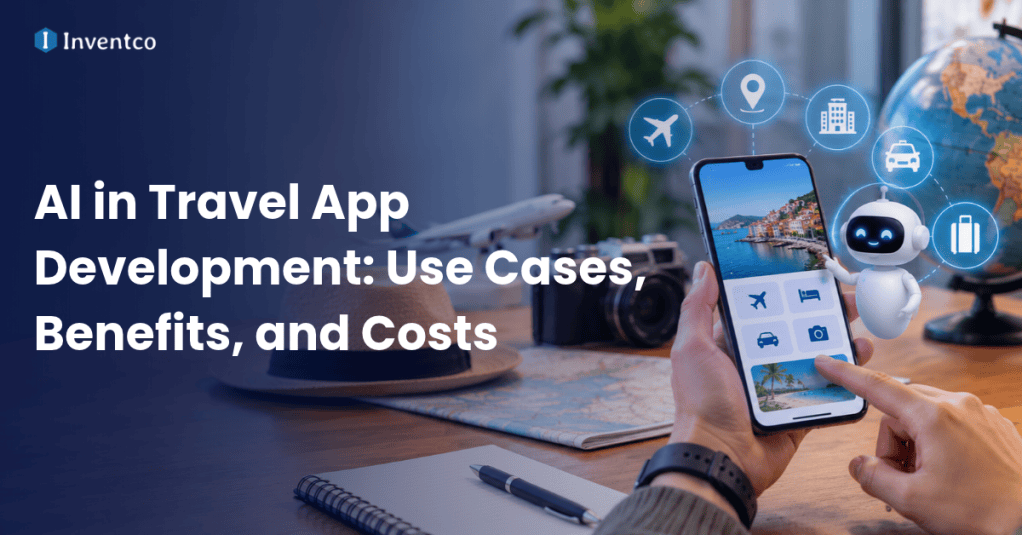
A travel application that uses AI will help businesses provide an intelligent travel experience to their users by offering personal recommendations, automated booking, smart chat bots, dynamic pricing and live support. A basic travel app may cost between $10,000 and $25,000 whereas a full travel platform could cost over $100,000. Adding an AI recommendation engine can cost between $12,000 and $70,000 depending on how complex it is.
Planning a trip can be a complex process including finding the best flight deals, checking hotel availability, researching destinations and managing your bookings. Travelers expect it to be an easy, fast and personalized process.
More and more travelers are expecting this and travel businesses are investigating the potential of using AI tools. With AI powered travel apps, users can have their preferences understood, data analysed and recommendations given based on what they need.
AI is reshaping how travel startups, booking platforms, and established travel companies serve customers and run their operations. Yet effective AI travel app development goes beyond adding a chatbot or recommendation feature. Before starting, businesses need to define the right use cases, understand the technical requirements, and set a clear development budget.
Key Takeaways
- AI makes it easier to arrange trips and helps travel applications personalize recommendations.
- Common consumer inquiries and booking-related requests can be handled by AI chatbots.
- Demand forecasting and dynamic pricing can benefit from predictive analytics.
- The cost of developing an AI recommendation engine might range from $12,000 to $70,000.
- Depending on the scale, the total cost of developing a travel app can range from $10,000 to $100,000 or more.
Key Use Cases of AI in Travel App Development
AI can support different stages of the travel journey, from discovering destinations to managing bookings after a reservation.
1. Personalized Travel Recommendations
AI will look at your preferences, search history, bookings, travel budget and interests to make recommendations on where you should go, what hotels to stay at, what to do and what packages to take.
If you often search for family friendly destinations, you will be recommended hotels with family amenities and local attractions.
2. AI-Powered Trip Planning
Travel planning applications can use AI to create suggested itineraries based on destination, budget, trip duration, and personal interests.
A traveler visiting Paris for four days could receive a suggested schedule covering attractions, restaurants, transportation, and nearby experiences. Users can then adjust the itinerary according to their preferences.
3. Intelligent Travel Chatbots
AI chatbots can respond to common questions about bookings, cancellations, hotel policies, travel schedules, and destinations. They can also help users navigate an app without searching through multiple screens.
With suitable integrations, chatbots can retrieve booking information and guide customers through selected service workflows.
4. Predictive Pricing and Demand Forecasting
AI systems can use historical booking data, seasonal trends, availability and market trends to predict demand.
These insights can be used by airlines, hotels and booking systems to make pricing decisions, promotional strategies and inventory decisions.
5. Real-Time Travel Assistance
AI can be used to help keep travellers informed of any changes to their bookings. Based on the information available, the app can be used to alert the traveller to any flight changes, weather updates or other travel options.
6. Review Analysis and Sentiment Detection
Travel businesses receive a high volume of customer reviews. AI driven sentiment analysis can help identify common themes in customer feedback regarding hotels, destinations, transport services and customer experiences.
This helps businesses identify common issues and areas for improvement.
Benefits of AI in Travel Apps
| Benefit | How It Helps |
| Better personalization | Provides recommendations based on individual preferences |
| Faster customer support | Automates responses to common questions |
| Improved planning | Helps users organize trips and activities |
| Data-driven decisions | Supports demand forecasting and business analysis |
| Higher operational efficiency | Reduces repetitive manual tasks |
| Better user engagement | Makes the app more relevant throughout the travel journey |
The value of an AI will depend on how it solves real user/business problems. It is better to create a recommendation system that provides value or a support chatbot that can be trusted than to add multiple AI’s without a clear purpose.
How Much Does AI Travel App Development Cost?
The cost of developing an AI-powered travel application depends on the app’s core functionality, AI capabilities, platform selection, integrations, and development complexity.
A useful starting point is to estimate the cost of the travel application itself and then account for the AI features being added.
Base Travel App Development Cost
Based on Inventco’s travel app development cost guide, the estimated development budgets are:
| Travel App Type | Estimated Cost |
| Basic MVP | 10,000–25,000 |
| Mid-Tier Travel App | 25,000–50,000 |
| Full-Featured Travel Platform | 50,000–80,000 |
| Enterprise-Grade OTA Platform | 80,000–100,000+ |
A basic MVP generally covers essential features such as user registration, destination listings, search, booking, and payment functionality. Mid-tier applications may include personalized suggestions, itineraries, reviews, notifications, and additional service integrations.
Full-featured and enterprise platforms require more advanced booking workflows, inventory management, multi-vendor capabilities, analytics, and scalable infrastructure.
Additional Cost of AI Features
AI functionality adds to the development budget. The cost depends on whether the application uses existing AI services, custom machine learning models, or more advanced recommendation and prediction systems.
One example from Inventco’s cost guide is the AI recommendation engine, estimated at 12,000–70,000. The final cost depends on data requirements, recommendation complexity, personalization, and integration needs.
Other expenses to consider include:
| Development Component | Estimated Cost |
| UI/UX Design | 3,000–10,000 |
| Third-Party API Integration | 3,000–15,000 per API |
| AI Recommendation Engine | 12,000–70,000 |
| Annual Maintenance | 15–25% of original development cost |
| Security Audits | 5,000–20,000 per audit cycle |
These figures are indicative estimates from the travel app development cost guide, not fixed quotations. They should not simply be added together to calculate every project’s final price. Some components may overlap with the base development scope, while API licensing, AI usage, hosting, and other recurring charges may be billed separately.
For example, a travel startup could begin with a 15,000–25,000 MVP and introduce an AI recommendation engine after validating its core booking experience. This phased approach helps control initial investment while leaving room for future improvements.
Factors That Affect AI Travel App Development Costs
A number of factors will affect the final cost of your budget.
- Complexity of AI: Simple chat bots will have different development requirements when compared to bespoke recommendation or predictive analytics systems.
- Data sources: The AI features you want will rely on having the correct and accurate data sources. This can add to the amount of development required.
- Third party systems: Booking systems, hotel inventory, maps, payment gateways and weather APIs will require additional development and license costs.
- Platforms: You will also need to decide if you’re going to build your app for iOS, Android or both. This can add to the overall scope but cross platform development can help reduce duplication.
- Security: As travel apps are processing personal details and payments it is vital to ensure your data is secure.
- Maintenance: AI models, API’s, infrastructure and mobile operating systems will all require regular updates and monitoring.
How to Build an AI-Powered Travel App?
A realistic development approach begins with the problem that the application has to tackle.
1. Define the product scope: Determine the target demographic, business model, and the most critical user issues.
2. Select the appropriate AI features: Determine whether personalized recommendations, trip planning, chatbots, or predictive analytics will add the most value.
3. Design the app architecture: Select the mobile framework, backend technology, database, cloud infrastructure, and necessary APIs.
4. Create the basic application: Include crucial functionality such user profiles, destination search, booking, payments, and notifications.
5. Integrate and test AI functionality: Connect the chosen AI services or models, then assess their accuracy, response quality, and performance.
6. Launch and improve: Track user comments, application performance, and AI outcomes to find areas for improvement.
Businesses contemplating this procedure might look into travel app development and mobile app development services to learn about the technical choices available.
Conclusion
Artificial intelligence is transforming the way we research, plan, compare and book travel. Travel companies can provide much more personal experiences using AI.
Investing in an AI solution will depend on what you want your product to do. Start with core travel functions then introduce some AI features. This can help keep costs down while proving that there will be demand for them.
Inventco Software helps businesses plan and develop custom travel applications with mobile, web, and AI capabilities. A clearly defined scope and realistic cost estimate can make the difference between an expensive feature list and a travel product built around genuine customer needs.



Leave a Reply