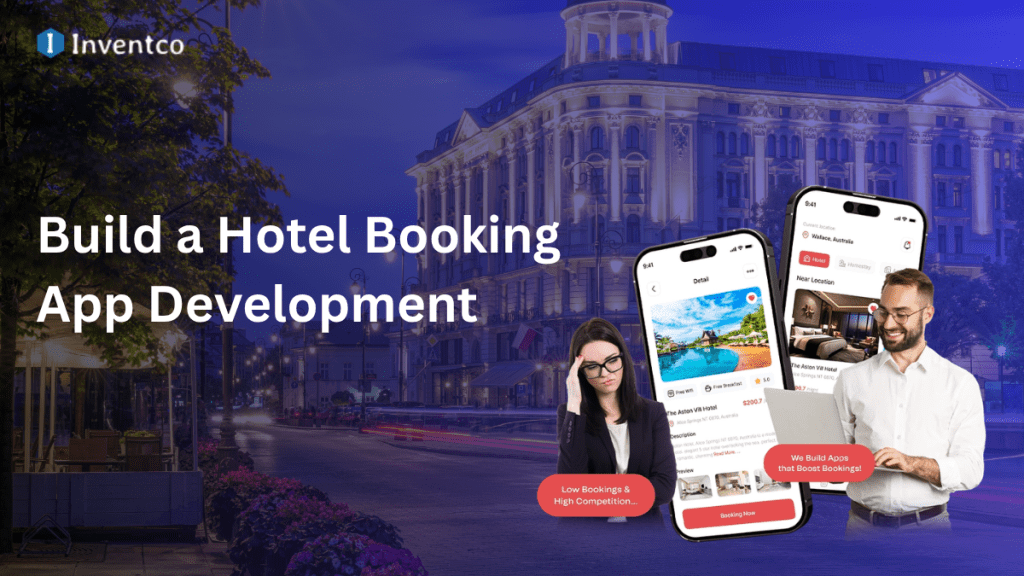
The way we approach trip planning has changed significantly over the last ten or so years. The modern traveler is searching for seamless travel experiences; they no longer rely on travel agencies or desktop browsing. For this reason, creating a hotel booking app is currently one of the biggest investments in the travel industry.
A well-designed app has the potential to completely change how consumers interact with your hospitality brand, from making last-minute reservations to offering individualized experiences. But it is more important to comprehend the market, the technology, and the people than it is to focus on the features.
Now let’s get started.
Why Are Hotel Booking Apps Growing Rapidly?
Digital platforms are at the core of the global travel and tourism industry’s continued expansion. Over 70% of tourists prefer using mobile applications to reserve lodging, according to industry data. Furthermore, it is anticipated that by 2027, internet travel reservations would exceed $1 trillion worldwide.
What is causing this expansion?
The most important element is convenience. Customers want to rapidly confirm reservations, check reviews, and compare pricing. Better consumer data and direct interaction are also advantageous to hotels and aggregators.
This is where a travel app development company comes into play, assisting companies in creating scalable solutions that meet changing customer demands.
What Is a Hotel Booking App?
A hotel booking application is a digital tool used for searching, comparing, and booking hotel rooms in real-time. This digital tool enables users to connect to hotel inventories, price systems, and payment systems within a few clicks.
There are typically three types of apps in this category:
- Aggregator Apps – Platforms listing multiple hotels and deals
- Brand-Specific Apps – Apps built for a single hotel chain
- Hybrid Models – Combining booking with travel planning features
Depending on the target market and corporate objectives, each model calls for a unique growth strategy.
Core Features That Define a High-Quality App
A successful hotel booking app prioritizes convenience, quickness, and trust over features. These are the salient characteristics that are crucial:
1. Easy-to-use Filters & Search
Based on factors like location, cost, rating, facilities, and availability, users have to be able to locate hotels fast. For low drop-off rates and great user satisfaction, smart filters are crucial.
2. Pricing and Availability in Real Time
Users will receive correct information about room availability and dynamic price if APIs are used. This will prevent booking disputes and foster user confidence.
3. Integration of Secure Payments
It is essential to have many payment channels, including UPI, cards, wallets, and foreign gateways. Tokenization and encryption are two more aspects that will guarantee user security.
4. Ratings and Reviews
One significant aspect influencing booking selections is user reviews. More than 80% of people trust reviews more than friend referrals, according to research.
5. Managing Reservations
It’s crucial to let consumers change, cancel, and reschedule their reservations. One of the key elements influencing user retention is this.
6. Notifications via Push
Reminders, booking confirmations, and timely alerts about deals will all assist to boost user engagement.
Advanced Features
The advanced features will make you stand out in the market after the fundamental aspects have been discussed.
Conversion rates will increase if recommendations are tailored to the user’s browsing behavior and previous reservations. According to recent estimates on travel technology, AI-based suggestions can increase booking conversion rates by as much as 30%.
In-app customer help is one of the next advanced features. The booking procedure will be less complicated as a result.
You may enhance the app’s functionality beyond booking by utilizing location-based capabilities. In essence, this will make your app a travel buddy.
Technology Stack Behind Hotel Booking Apps
The right mix of technologies is needed to create a solid application.
Frameworks like React Native or Flutter may be utilized for cross-platform frontend development, which saves money and time. However, for backend development, scalable technologies like Django or Node.js may be utilized for seamless performance.
Scalability and hosting are provided by cloud platforms like AWS and Google Cloud. Critical features employ APIs for payments, hotel databases, and mapping.
A firm called Inventco Softwares specializes in choosing technology stacks for reliable and scalable applications.
Development Process
A number of procedures must be carefully considered in order to develop a hotel booking app. First, in order to comprehend users and rivals, market study is necessary. Eventually, this will add to the app’s USP. The UI/UX stage, which determines user flow, follows. This has an impact on the app’s total conversion rate. The development stage, which includes both front-end and back-end integration, comes next. Extensive testing for stability and issues comes after this stage. The application is launched and modified in response to user feedback after all of these procedures are finished.
All of these procedures will be effectively carried out by a travel app development company in order to finish the project swiftly.
Cost of Hotel Booking App Development
Depending on the features and complexity of the app, the cost of creating a hotel booking app might vary greatly.
The total cost of creating a basic app with features can be anywhere from $15,000 to $30,000; however, depending on the features included in the app, the total cost may exceed $80,000.
The following are some important variables that may have an impact on the app’s total cost:
- The app’s feature count
- Participating platforms (iOS, Android, or both)
- Integration with other platforms or tools
- complexity of the app’s design
- The amount of time needed to develop an app
By concentrating on the elements that can provide the highest return on investment, working with seasoned experts like Inventco Softwares can help lower the app’s overall cost.
Real-World Examples
The industry’s standards have been raised by websites like Booking.com and Airbnb. Innovation, trust, and simplicity have been the keys to their success.
For example, by emphasizing the distinctiveness of the experience and community evaluations, Airbnb has transformed the booking process. Booking.com has achieved success in the market by providing a wide range of filters and affordable prices.
This demonstrates the idea that feature quantity is secondary to user experience.
Key Challenges in Development
Despite all of these advantages, creating a hotel booking app is not without its difficulties.
First of all, data synchronization is really difficult. This is due to the difficulty of updating data in real-time across many hotel databases.
Second, there is the issue of security. The payment and user information aspects are mostly to blame for this. Complying with international regulations like GDPR is crucial.
Last but not least, in a cutthroat market, keeping users might be difficult. Updates and a sense of loyalty are two ways to address this.
Key Takeaways
- In today’s travel environment, hotel booking applications are a need rather than a luxury. However, execution is more important than simply adding things.
- Providing a smooth user experience, utilizing technology, and refining it in response to user input should be the main priorities.
- You may create your app more effectively by choosing the best travel app development company.
- Businesses can easily manage the complexity of app development with the aid of companies like Inventco Softwares, which have the depth and knowledge in the field.
Conclusion
Hotel booking apps are at the center of this change as demand for digital travel-related solutions continues to rise. Investing in the creation of a hotel booking app is not just about technology if your company wants to stay relevant; it’s also about satisfying consumer needs.
Your app might be your most effective competitive weapon in a market where client convenience is crucial.
You may design a user experience using an app that encourages repeat business.
 Inventco
Leave a comment