Over the past ten years, there has been a significant shift in how customers buy common goods. A new digital economy has been shaped by convenience-driven businesses like grocery apps, rapid commerce, and meal delivery. The trend is currently being followed by alcohol retail. Alcohol delivery systems are emerging as a lucrative digital business possibility due to growing smartphone adoption and changing legislation.
Alcohol Delivery App Development provides a scalable method of connecting consumers with authorized liquor stores via a digital platform for business owners, merchants, and startups. However, developing a successful solution necessitates a thorough comprehension of features, expenses, legal requirements, and revenue-generating tactics.
This manual examines how alcohol delivery services operate, what features they require, how much it costs to produce them, and which business models are most viable in this expanding sector.
Growing Demand for Alcohol Delivery Platforms
On-demand convenience has become more popular among consumers. Many consumers increasingly choose to order drinks via smartphone apps and have them delivered right to their door rather than going to actual liquor stores.
Market analysis demonstrates how quickly the sector is growing. India’s online alcohol delivery industry was estimated to be worth $12.05 billion in 2024 and is expected to expand at a compound annual growth rate (CAGR) of more than 12% to reach $36.71 billion by 2033.
The industry is growing quickly on a global basis as digital commerce and logistics technology continue to progress. In order to satisfy the growing consumer demand for quick, on-demand beverage delivery services, businesses are increasingly implementing Alcohol Delivery App Development solutions. These platforms are revolutionizing the way alcohol is bought and delivered with improved features including safe age verification, real-time order tracking, digital payments, and effective delivery management. Consequently, during the following ten years, the global market is anticipated to develop at robust double-digit rates.
This increase is caused by a number of factors:
- Increased use of smartphones and the internet
- Demand for home delivery and convenience
- Collaborations between internet marketplaces and liquor retailers
- Real-time tracking technology and sophisticated logistics
Prominent platforms including Gopuff, Instacart Alcohol, and Drizly have already demonstrated the model’s effectiveness in a variety of areas.
What Is an Alcohol Delivery App?
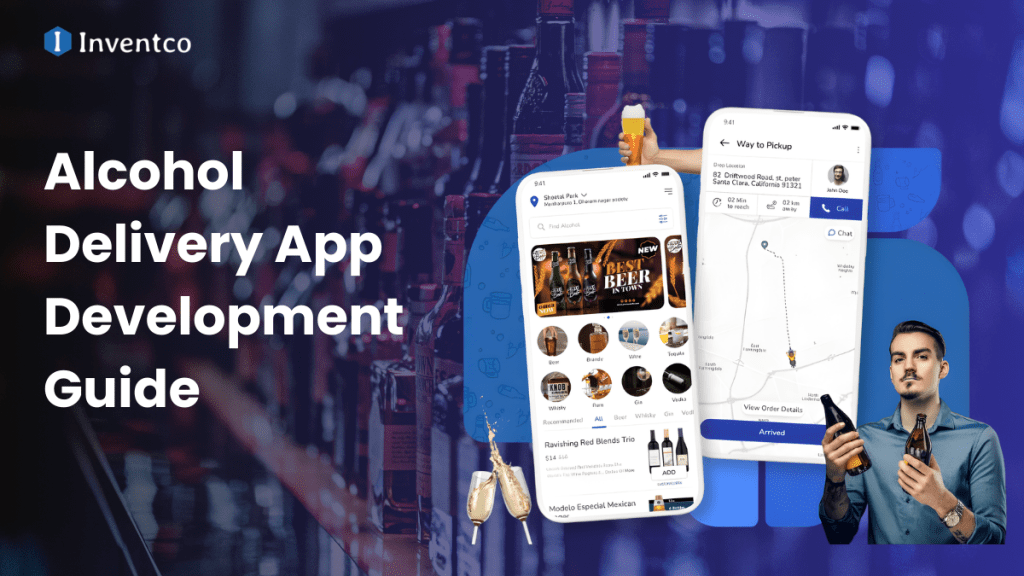
So you want to know about alcohol delivery apps. These are like websites that you can use on your phone to buy alcohol from stores that are allowed to sell it. You can look at what they have picked and make sure you are old enough. Then they will bring it to your house. You do all of this from your phone, which’s pretty cool. The alcohol delivery app is, like a man that helps you get what you need from the stores that sell alcohol.
Typically, these platforms operate through a multi-panel ecosystem that includes:
- Customer application
- Delivery driver app
- Merchant or retailer dashboard
- Admin control panel
Alcohol Delivery App Development’s objective is to establish a smooth system that complies with legal requirements and facilitates ordering, verification, payments, and logistics.
Essential Features for Alcohol Delivery Apps
To make an alcohol delivery platform work well you need to have a lot of features. These features should make things easy for people who use the platform. They should also help you follow the rules and make sure everything runs smoothly. The platform needs to be convenient, for people who want to order alcohol. It needs to comply with all the laws.. It needs to be efficient so that it does not cost too much to operate the alcohol delivery platform.
1. User Registration and Age Verification
One of the most important components of alcohol delivery apps is age verification. In order to verify that users are of legal drinking age, platforms must incorporate identity verification mechanisms. This frequently entails driver ID checks at the time of delivery, digital ID scanning, and document verification.
2. Product Catalog and Search
It should be possible for users to peruse several categories, including wine, beer, spirits, and ready-to-drink drinks. Customers can search by brand, price, popularity, or alcohol concentration with the aid of clever filters.
3. Real-Time Order Tracking
GPS tracking is used by modern delivery apps to show clients the precise location of their order. This increases user trust and transparency.
4. Secure Payment Options
Better conversion rates require a variety of payment methods. Online banking systems, digital wallets, and credit cards are common integrations.
5. Delivery Scheduling
While some clients demand scheduled deliveries for gatherings or parties, others desire instant delivery. Offering both options increases platform usability.
6. Retailer Dashboard
Liquor establishments need to have a specific dashboard for managing product inventory, pricing, and orders.
7. Push Notifications and Promotions
By alerting consumers about sales, seasonal deals, or the introduction of new products, notifications maintain user engagement.
Businesses like Inventco Softwares and other development companies frequently concentrate on creating modular platforms that allow these capabilities to be tailored to local laws and corporate needs.
Technology Stack Behind Alcohol Delivery Apps
A good app needs to work and be able to handle a lot of users. Most websites and apps use systems that can handle a lot of people using them at the same time and keep everything safe. This is important for apps that require technology infrastructure. Apps need frameworks to support high traffic and secure transactions.
Typical technologies include:
- Frontend: Flutter, React Native, Swift, Kotlin
- Backend: Node.js, Python, or PHP
- Database: MongoDB or PostgreSQL
- Cloud services: AWS or Google Cloud
- Maps and tracking: Google Maps API
With the help of these technologies, developers can create scalable, quick, and responsive systems that can process thousands of orders at once.
Cost of Alcohol Delivery App Development
A number of variables, such as app complexity, design quality, and integrations, affect how much it costs to establish an alcohol delivery platform.
An approximate breakdown of development costs can be found below.
- Basic app version: It might cost between $25,000 and $40,000 for a basic platform with basic functions like product listings, ordering, payments, and tracking.
- Mid-level solution: The price range for advanced features like loyalty programs, multi-store integration, and analytics dashboards might be between $40,000 and $80,000.
- Enterprise-level platform: Large-scale applications with sophisticated compliance tools, route optimization, and AI suggestions can cost more than $100,000.
Before making large-scale infrastructure investments, development firms like Inventco Softwares frequently advise beginning with a minimum viable product (MVP) to gauge market demand.
Popular Business Models for Alcohol Delivery Apps
Long-term profitability depends on selecting the appropriate revenue strategy. A variety of monetization techniques are employed by the majority of alcohol delivery services.
1. Commission-Based Model
In this model, the platform charges liquor stores a commission on every order. This is one of the most common models used by delivery platforms.
2. Delivery Fees
Depending on the location, order amount, and delivery speed, customers pay a nominal delivery fee.
3. Subscription Model
Certain platforms provide premium subscriptions that entitle customers to free deliveries, special discounts, or expedited service.
4. Advertising and Featured Listings
Retailers can increase visibility and sales by paying to have their products appear at the top of search results.
Several revenue streams are frequently combined in a well-thought-out alcohol delivery app development approach to produce steady revenue.
Real-World Examples of Alcohol Delivery Platforms
Some companies have done a good job of getting alcohol delivered to people all around the world. For example Drizly became one of the known alcohol delivery apps in North America before it started working with Uber’s delivery system.
Other companies like Instacart have also started delivering alcohol by working with liquor stores. These alcohol delivery services show that it is really important to have logistics work well with retailers and make sure the app works properly for people to use them.
Companies that build apps, like Inventco Softwares look at these alcohol delivery services to figure out how to make apps that will work well for new companies that want to start delivering alcohol.
Key Challenges in Alcohol Delivery Platforms
Alcohol distribution has potential, however there are a number of operational difficulties.
Regulatory compliance is one of the main problems. Apps must incorporate legal protections like age verification, geofencing, and delivery time limits because alcohol regulations differ greatly between states and regions.
Inventory synchronization between the app and retailers presents another difficulty. To avoid out-of-stock orders, real-time updates are crucial.
Because customer happiness is directly impacted by delivery time, logistics optimization is also essential.
Key Takeaways
One of the areas of digital commerce that is expanding the fastest is alcohol delivery apps. Startups and retailers are making significant investments in mobile platforms due to the growing need for ease and quick delivery.
Strong technology, compliance systems, and a viable business model are all necessary for an alcohol delivery app development project to be successful. Building a trustworthy platform requires features like identity verification, safe payments, and real-time tracking.
Companies venturing into this field ought to begin with a scalable MVP, collaborate with authorized merchants, and concentrate on providing a flawless customer experience.
Alcohol delivery apps will probably become a crucial component of the on-demand economy as the digital retail landscape develops.
Conclusion
The way customers buy common goods, including alcoholic beverages, has changed due to the quick expansion of on-demand services. The need for dependable digital platforms keeps growing as more consumers choose convenience and doorstep delivery. For business owners and retailers interested in developing alcohol delivery apps, this presents excellent prospects.
It takes more than simply a mobile app to create a successful platform. Compliance, safe payment methods, real-time logistics, and a smooth user experience must be the top priorities for businesses. Every component contributes to long-term success, from critical features and scalable technology to sustainable income strategies.
Businesses are being assisted by companies such as Inventco Softwares in developing tailored alcohol distribution systems that meet both regulatory requirements and contemporary customer expectations. Businesses can successfully enter this growing digital marketplace and create a lucrative delivery environment by beginning with a well-thought-out strategy and concentrating on client convenience.
 Inventco
Leave a comment