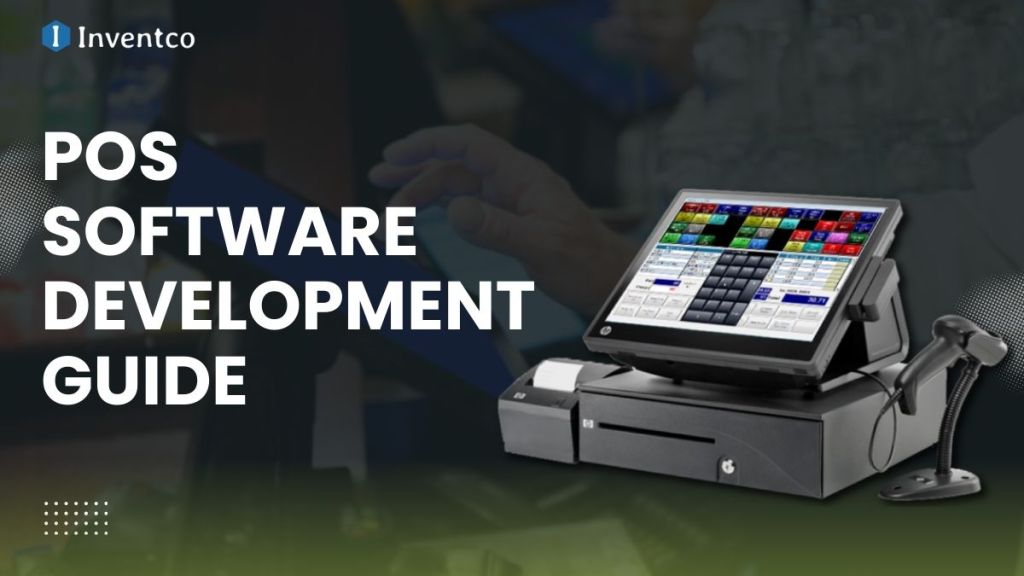
As retailers and service providers adapt their business strategies to rely on digital-first solutions, the pace of their transformation has quickened dramatically. Regardless of their size (from small coffee shops to large chains), companies are investing in advanced transaction systems that improve their efficiency and provide customers with better service experiences. As a result, many businesses now rely heavily on POS software development as part of automating functions such as billing, inventory management, and customer profiling, as well as increasing operational accuracy.
Companies now expect much more than just tools for generating bills; they want a single integrated system that includes all sales-related functions, including analytics, payment processing, and customer interactions. This guide has been developed to provide developers and businesses alike with information to help them build robust solutions, including recommendations for developing a complete solution, the key features to look for when developing products, and recommendations for best practices in developing integrated systems.
Key Takeaways
- POS Software tailored to meet the unique needs of each business automates the transaction process as well as increasing operational efficiencies.
- An Industry standard now is to have Cloud and Mobile solutions available due to their flexibility and scalability.
- Furthermore, today’s systems require robust security, strong analytics, and multi-channel integration as part of the overall package.
- Real-time access to data can aid in making better decisions for the business and ultimately provide better experiences for customers.
- Ensure to select experienced developers when creating the POS system for your business. This will guarantee reliable functionality and also provide support for future scalability.
Understanding Modern POS Systems
Point of Sale (POS) systems combine hardware and software to allow businesses to conduct transactions. Recent advances in technology mean that modern POS will now perform other functions beyond payment acceptance – some of which include tracking inventory levels, generating real-time reports on sales activity, being used as an employee management tool, and providing analysis about how customers purchase from retailers.
Recent statistics released by a research firm show that nearly thirty-two percent (32%) of the world’s retailers currently utilize cloud-based POS systems; approximately twenty-four percent (24%) expect to migrate to cloud POS systems within the next twenty-four months. This movement is indicative of businesses considering how scalability and access to real-time data are critical for staying competitive.
Businesses who work with an established POS software development company can develop a customized solution that meets their unique and specific needs based on classification groups such as hospitality, retail, healthcare, and logistics, among others.
Key Benefits of Investing in POS Software Development
1. Improved Operational Efficiency
Billing automation, inventory tracking and reporting reduce time-consuming manual tasks and allow for less possibility of getting it wrong. Companies can see how they are performing in real time with regard to sales and change prices or inventory to react to what is going on at a moment’s notice.
2. Enhanced Customer Experience
More efficient checkout lanes, personalization of offers and loyalty program integration help improve the overall customer experience. Research shows that 73% of customers want to do business with companies that offer fast, contactless methods for making payments.
3. Data-Driven Decision Making
A well-constructed POS system has the capability to generate actionable sales data for the owner which will provide insight into customer purchasing behaviours; seasonal demands; and how well a product fits into a customers’ purchasing patterns.
4. Multi-Channel Sales Management
The modern-day company operates within a mix of physical storefronts; e-commerce sites; and mobile applications. Integrated systems allow businesses to manage all channels from one single point of view.
Companies like inventco softwares create custom solutions designed specifically to meet the systems and processes necessary to operate efficiently and become competitive in the marketplace.
Essential Features of a High-Quality POS Solution
To create an effective POS software, it is essential to find a balance between all three areas (functionality, security, and user experience). Below are some of the key features a POS solution must have:
Inventory Management
Businesses can use automated inventory updates to prevent stock over accumulation and shortages by giving managers smart alerts when their stock reaches a predetermined line.
Payment Integration
Offering digital wallets, credit card, and contactless payment systems as alternative forms of payment for customers enables businesses to improve their payment process/collection method for customers.
Sales Reporting and Analytics
Detailed dashboards provide merchants with information about their product profitability at different sales volumes, revenue trends, and when peak sales hours are, allowing merchants to make proper business decisions.
Customer Relationship Management
By utilizing a customer relationship management (CRM) where they keep track of customer purchase history, merchants can create customized promotions as well as offer loyalty rewards based on previous/past purchases.
Employee Management
Role-based access to business systems coupled with tracking of attendance and performance will allow for overall improvement across the organization’s workforce.
Cloud Integration
Cloud computing systems allow organizations to access and sync their systems with multiple branches or locations as well as to access their business information from anywhere in real time.
Most experienced Point Of Sale (POS) Software Development Companies that build Point Of Sale (POS) Software will develop systems with a scalable architecture that allows for the company or business to grow as they expand.
Step-by-Step POS Software Development Process
1. Requirement Analysis
During the planning method, business objectives, job flows, and the difficulties unique to the industry must first be understood. The goal of this step is to produce a method that provides solutions to the day-to-day problems of businesses instead of just supplying them with more generic types of functions.
2. UI/UX Design
As employees have to use a POS system every day, it is imperative that the user interface is easy to use and navigable for those who will be using it. By creating a method that is essentially easy to learn, the amount of time it will take employees to become familiar with it will be minimal.
3. Technology Stack Selection
The developers will select a programming language, framework, and database system for the method based on its complexity and the anticipated scalability.
4. Development and Integration
Building the core of the transaction method, establishing payment gateways, and developing the report module and third-party integrations constitute the Building phase of the project.
5. Testing and Quality Assurance
The project will be tested to ensure that its accuracy, safety, and effectiveness are at acceptable levels, as well as detect bugs and check that it is compatible with all supported operating systems.
6. Deployment and Maintenance
After the project has been deployed, to continue to be efficient and safe there will need to be regular updates, ongoing performance monitoring, and continued technical support provided.
Companies like InventCo Software utilize agile development methodologies so that businesses can continue to adjust features according to their ever-changing market requirements.
Types of POS Solutions Businesses Can Develop
1. Retail POS
Designed for supermarkets, clothing stores, and electronics outlets, these systems focus on inventory tracking and customer purchase behavior.
2. Restaurant POS
These solutions include table management, order tracking, and kitchen integration to streamline food service operations.
3. Mobile POS
Mobile-friendly platforms allow businesses to accept payments anywhere, improving flexibility for delivery services and pop-up stores.
4. Cloud-Based POS
Cloud infrastructure offers scalability, data security, and remote accessibility, making it a popular choice among modern enterprises.
Real-World Example of POS Implementation
A medium size retail business had operations in 5 cities and performed poorly due to being unable to effectively manage their inventory and sales via one system. Prior to installing a centralized system, the company would often have stock discrepancies as well as not being able to provide timely reports.
The addition of a central system allowed the company to reduce inventory discrepancies by 40% and increase speed of checkout by 30%. The use of real time analysis was able to allow the companies to distinguish which products were in high demand and they were able to use that information to streamline their supply chain processes.
This demonstrates how a corporation can improve their business through a personalized software application developed specifically by a software development company such as Inventco Software without having to change their current operating processes significantly.
Security Considerations in POS Development
Security is important as POS systems manage both sensitive financial/ customer information. To ensure security developer must use;
- End-to-end Encryption of data
- Secure authentication protocols
- Comply with PCI DSS
- Regular update software and test for vulnerabilities
Any business that neglects security standards runs the risk of financial loss or harm to its reputation with secure Architectures as a must do for all developers.
Emerging Trends in POS Software
The development of new-generation systems has been influenced by the latest technology in the industry:
- Artificial Intelligence (AI) Analytics for Predicting Consumer Behaviour
- Contactless and Biometric Payment Methods
- Voice-Enabled Transactions
- Blockchain Technology to Secure TransactionsInternet of Things (IoT) to Automate Inventory Tracking
The Future-Ready POS Application is Being Developed with Integration of These Technologies and Usability/Dependability in Mind.
Cost Factors Influencing POS Development
There are multiple factors influencing the cost of developing a product. Those factors include:
- Complexity of software and the amount of customization required.\
- How well a new product will work with other systems (third-party integrations).
- Hosting environment (cloud infrastructure and data storage).
- Security and compliance standards associated with a new solution.
- Ongoing maintenance and upgrades.
An established POS Software Development Company can help develop your product cost effectively, while aligning it to your business’s growth strategy.
Conclusion
Businesses from many industries are adopting digital transformation to be competitive in dynamically changing markets. Investing in a well-designed POS system allows businesses to simplify operations, increase customer interaction, and derive meaningful insights from sales data.
With an increasing desire for automation and data-driven operations, POS software development will remain a key component of business growth strategy. Companies that work with competent technology partners, such as inventco softwares, may create specialized, scalable solutions that address both present operating demands and future growth objectives.
 Inventco
Leave a comment