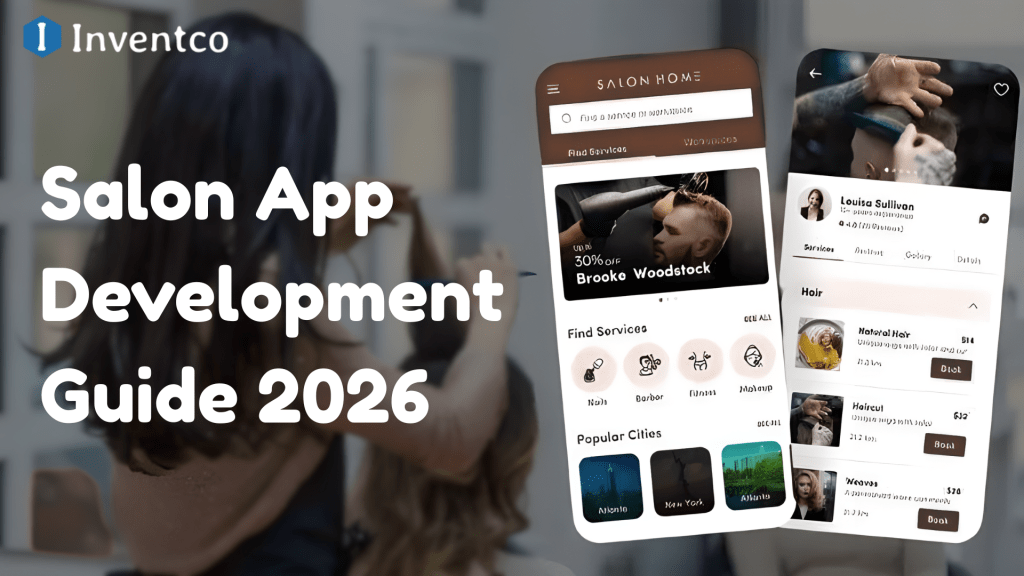
The beauty industry is undergoing a tremendous digital transformation, as modern beauty and wellness consumers exhibit behaviors characterized by ease, personalization, and expediency. As such, more mobile technologies are being adopted within such industries, and a salon app development strategy can assist salon business owners in maximizing their operations, in terms of attracting more clients, as well as improving customer loyalty. As we clamor towards 2026, digital technologies are no longer an option but a necessity in advancing a business enterprise.
This tutorial will teach the basics of developing a salon app, market information, features, examples, and business tips to succeed in the competitive beauty service sector.
The Growing Demand for Salon Applications
The growth prospect of this industry has also been projected, and it is expected that this market will touch an estimated figure of $758 billion by 2027. Some of the prominent factors responsible for the growth of this industry are related to the rising trend of salon booking apps, which can help salon owners customize their services while maintaining efficiency.
The present-day customer prefers booking services online rather than calling or walking into a salon, as this provides more convenience, flexibility, and transparency. Furthermore, recent statistics have highlighted that nearly 70 percent of millennial and gen-z-based salon customers use their smartphone devices for booking grooming services.
A well-designed booking system helps businesses schedule appointments, track customer preference lists, and communicate effectively with customers. Digital scheduling systems are helping businesses to reduce no-shows, improve efficiency amongst staff, and increase customer retention rates and revenue streams, especially among those using mobile technologies.
Why Salons Are Investing in Mobile Applications?
The different challenges related to operations, management, and co-ordination with clients are faced by the salon owner/administrator. This beauty salon software addresses all the challenges faced by the salon operators. A mobile application gives the enterprise the capability to provide an integrated service experience. Services will be browsable, and clients will be able to choose their own service provider and book appointments at their convenience. Business applications will allow for real-time updates, tracking of services, and management of promotional campaigns.
The lead development companies, such as Inventco Softwares, have enabled service-based companies to have scalability in the mobile applications they develop. Most of their concentration is always on meeting customer requirements while reducing the operational issues. Their expertise has shown the capabilities of developing a platform to manage operational issues in a company effectively.
Essential Features of a Modern Salon App
1. User-Friendly Appointment Scheduling
An easy-to-use booking system is the foundation of every salon app. Customers should be able to simply browse available slots, select preferred stylists, and confirm appointments in seconds. Real-time scheduling also helps to prevent overbooking and avoids manual errors.
2. Customer Profile Management
Keeping track of customer preferences, previous services, and purchasing history allows salons to provide more tailored experiences. Personalized services frequently result in increased client satisfaction and return visits.
3. Online Payment Integration
Customers can use secure payment channels to pay with digital wallets, credit cards, and other online means. This function increases convenience while lowering payment delays.
4. Push Notifications and Reminders
Automated reminders help to reduce missed appointments. Notifications also enable salons to alert consumers about discounts, seasonal promotions, and new services.
5. Staff and Service Management
With the use of an integrated dashboard, salon owners can control staff scheduling, service availability, and performance indicators. This enhances operational effectiveness and team coordination.
6. Loyalty Programs and Rewards
Engaging clients with reward-based strategies helps you build long-lasting relationships. Digital loyalty programs encourage recurring business and customer recommendations.
Advanced Technologies Transforming Salon Applications
Technology advances are altering salon operations in 2026. Integrating innovative solutions can dramatically improve both user experience and business intelligence.
AI and Personalization
AI-powered suggestions assist clients in discovering services based on their previous bookings and interests. Personalized ideas boost consumer engagement and booking frequency.
Augmented Reality for Service Preview.
Some current applications use augmented reality technology to help users picture hairstyles or makeup looks. This innovation enables clients to make confident service decisions before booking.
Cloud-Based Management Systems
Cloud integration guarantees constant performance across several devices, remote access, and data security. Salon owners who oversee multiple locations are still able to monitor activities.
In order to integrate these technologies while guaranteeing scalability and performance optimization, a trustworthy mobile app development company is essential.
Real-World Example of Salon App Success
Many multinational salon companies have successfully utilized mobile apps to enhance the consumer experience. Leading beauty businesses, for example, provide applications that allow for rapid appointment scheduling, stylist choosing, and membership perks. These apps have helped hairdressers cut customer wait times by over 40% while encouraging repeat reservations.
Similarly, small and medium-sized salons are implementing customized mobile solutions created by technology partners like as Inventco Software. Their approach is on developing systems that are adaptable and user-friendly, meeting the needs of modern businesses.
Steps to Build a Successful Salon Application
Step 1: Define Business Goals
Determine the primary goal of the application. Whether the focus is on customer engagement, appointment management, or revenue growth, clear goals help frame the development plan.
Step 2: Conduct Market Research
Understanding customer behavior and rival strategies allows you to design a one-of-a-kind application that stands out in the marketplace.
Step 3: Choose the Right Technology Stack
Choosing scalable and safe technology ensures consistent performance and long-term viability. An expert mobile app development company can recommend appropriate frameworks and tools.
Step 4: Focus on User Experience Design
A user-friendly interface is critical to the success of a program. Clean layouts, easy navigation, and straightforward booking processes all contribute to higher client satisfaction.
Step 5: Testing and Optimization
Improved security, quicker loading times, and bug-free functionality are ensured by extensive testing before program activation.
Step 6: Launch and Continuous Updates
Based on user feedback, post-launch updates assist preserve program performance and add new features.
Common Challenges in Salon App Development
While digital transformation provides numerous benefits, salon operators may encounter the following challenges:
- Managing Data Privacy and Security
- Integrating third-party payment and CRM systems.
- Maintaining application scalability.
- Ensure cross-platform compatibility.
By offering specialized and long-lasting solutions, working with expert developers like Inventco Softwares can help address these problems.
How Salon Apps Add Value to Customers?
Salon applications are intended not only to promote corporate growth, but also to improve client convenience. These platforms enable consumers to schedule services, receive professional suggestions, and manage appointments without having to physically visit the salon.
Customers benefit from shorter wait times, flexible scheduling, and individualized service recommendations. Furthermore, digital platforms make pricing and service availability more transparent, increasing confidence and long-term engagement.
Future Trends in Salon App Development
The salon sector is constantly evolving in response to developing technological advances. Voice-based booking systems, AI-powered customer analytics, and contactless service management are all projected to be common features in future applications.
Subscription-based service models are increasingly becoming popular. These approaches enable customers to subscribe to monthly beauty packages, resulting in predictable revenue streams for salons.
Key Takeaways
- Mobile technology is revolutionizing the beauty and wellness industries.
- A well-planned salon app development strategy boosts operational efficiency and customer engagement.
- Integrating new technology like AI and AR improves the consumer experience.
- Working with a qualified development team guarantees scalable and safe application solutions.
- Salons can use digital booking tools to boost customer retention and business growth.
Conclusion
The beauty industry is rapidly transitioning to digital convenience, and companies that adapt early enjoy a significant competitive edge. Investing in mobile applications allows salons to streamline operations, increase service quality, and develop long-term customer relationships. Salon businesses may succeed in 2026 and beyond by prioritizing user-friendly design, advanced technology integration, and strategic development planning.
 Inventco
Leave a comment